An asylum seeker at Villawood detention centre has set himself on fire and is in hospital with serious burns, sparking an investigation by the immigration department.
The male asylum seeker sought protection in Australia along with his family in 2010 and now has six children including a two month old infant.
The asylum seeker’s wife told Guardian Australia she was at a library with her children when she received a call about the incident.
“From what I’ve been told is that it is self inflicted harm and it’s a burn incident,” she said. “There was about 10% burns on his face right down to the left of his neck.”
She said the immigration department has not provided her with further details about the incident or events preceding it.
Her husband had been suffering depression since he was taken to Villawood in January 2015. He made a previous self-harm attempt while in detention.
“He has not seen or touched the newborn child,” she said. “He doesn’t want the kids to even see him in detention. He doesn’t want them to be a part of it.”
The family sought protection in Australia from the United Arab Emirates after arriving on a tourism visa by plane to Australia in 2010. They were refused a protection visa in 2010, and lost an appeal to the refugee review tribunal in 2011.
The man was taken back into detention following an unsuccessful federal court bid. His wife and children were also taken to Villawood detention centre in June 2015, but were released so she could give birth to her sixth child.
The family has exhausted most avenues of legal appeal for their protection claims in Australia.
“Why he did this is because he felt so helpless,” the man’s wife said. “Sometimes it’s too much. I cannot measure it anymore.”
A spokeswoman for Department of Immigration and Border Protection said: “The department can confirm that a male detainee was taken to hospital yesterday 17 September 2015, following a self-harm incident at Villawood IDC.
“The individual is receiving appropriate medical treatment, but his injuries have been assessed as non-life threatening. The department is investigating the matter.”
The incident is the second time a person held in immigration detention has set themselves on fire this week.
On Tuesday Ali Jaffari, a Hazara man in Perth immigration detention centre, also set himself on fire and later died from his injuries.
In May 2014 a Tamil asylum seeker, Leo Seemanpillai, self- immolated after spending 18 months in legal limbo.
In Australia, the crisis support service Lifeline is on 13 11 14. Hotlines in other countries can be found here.
This article was originally published in the Guardian. Read the original article here.
My latest in ABC’s The Drum on the death of little Aylan Kurdi and government’s reaction to the Syrian refugee crisis. I haven’t reprinted the image- I think everyone has seen it already. Also here a great discussion on the debate around the publication of the distressing images.
Syrian boys, whose family fled their home in Idlib, walk to their tent, at a camp for displaced Syrians, in the village of Atmeh, Syria. Picture: Flickr/ Freedom House
The fact that the Government would pause in light of such a visceral tragedy to suggest that Australia should prioritise Christian refugees from Syria speaks volumes, writes Sarah Malik.
It was the picture that shocked the world.
A little boy lies face down on the beach. His still, lifeless body caressed gently by waves. His sandals are still strapped to his little feet. In his neat red shirt and little blue shorts, he could be sleeping or resting.
A Turkish police officer stands to one side, his shoulders hunched as if in prayer.
The discovery of Aylan Kurdi’s body on a Turkish beach last week cut a searing image in the conscience of the world. It tore through the ballast of politics, rhetoric and racialisation that continues to obscure one of the great humanitarian crises of modern times.
The little boy who perished along with his brother Galip and mother Rihan, one of 12 Syrian asylum seekers trying to reach Greece when their boat sank, represents the many thousands seeking safety and asylum as their country is torn apart by war and conflict.
The picture of the doll-like three-year-old on the beach has galvanised public opinion around the world, forcing even the Australian Government to outline its commitment to Syrian refugees. But the racialisation continues, with Barnaby Joyce calling for Syrian Christians to be prioritised in any asylum intake, a motion that has been echoed by Prime Minister Tony Abbott.
Australia was recently criticised in the New York Times for a military response to asylum seekers which is shrouded in secrecy. This has been combined with bizarre border security campaigns including thefarcical ‘Operation Fortitude’, a proposal quickly scuttled after widespread ridicule.
The campaign purporting to subject Melbourne residents to random visa checks underscores a Government that will take advantage of any opportunity to represent itself as the strongman protecting us from the ‘illegal’ hordes threatening to destabilise Australia.
The fact that the Government would pause in light of such a visceral tragedy, blasted into public consciousness in such horrific fashion, to make a subtle distinction on the kinds of Syrian asylum seekers it would be willing to consider is callous.
It speaks to the depths it will go to in order to stoke fears of the brown Muslim hordes threatening our pristine white borders.
It doesn’t take much to read between the lines of random visa checks and the prioritisation of Christians. People like us only, please.
The image of Aylan underscores the vulnerability of those fleeing, their powerlessness in the face of a political and military machinery that punishes and paints them as threats. It is a powerful image that threatens the curtain of abstraction, silence and othering that has come to characterise the rhetoric around refugees.
This otherising of refugees, the destruction of their humanity, allows travesties such as our detention regime, regularly exposed as rife with reports of sexual assault, violence, suicide and depression to continue with impunity.
When it becomes a crime for employees to talk publicly about what happens in detention centres with the passing of the Border Force Act, when refugees live in fear of speaking to journalists, with access a constant issue, the result is an abstraction. It is an easy to demonise an abstraction.
Aylan’s picture has blazed onto the soul of the nation the reality of the human. This child’s death must inspire us to look beyond categories of race and religion and towards a common humanity.
The most powerful threat to an abstraction is the power of the singular. A child just like yours, with blue shorts and sandals.
As Persian poet Rumi said:
Not a Christian or Jew or Muslim, not Hindu, Buddhist, Sufi or Zen, Not any religion… first, last, outer, inner, only that breath breathing human being.
Feature: For many asylum seekers who experience a sense of hopelessness and isolation inside Villawood Detention Centre, Ramadan is a source of spiritual sustenance.
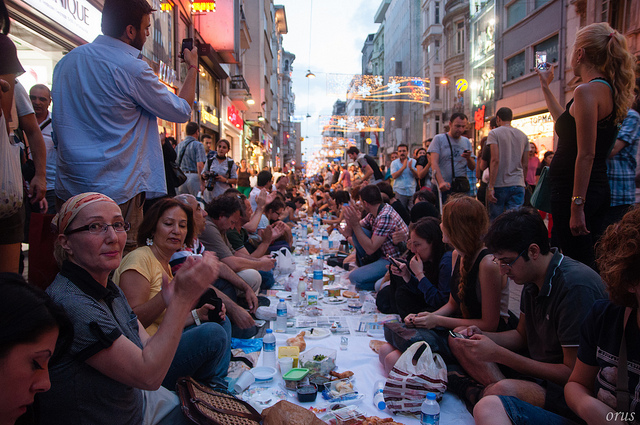
It’s iftar time in Sydney’s Villawood Detention Centre.
Plastic containers bursting with hummus, tabouli, garlic sauce and kebab snake their way through security and are picked up by hungry fasting asylum seekers in the visitor’s centre.
In the open courtyard around 30 asylum seekers, mostly men, gather around tables piled with the food, exhaling plumes of smoke as they rub their hands together for warmth and wait for sundown.
As Muslims around the world sit down to huge feasts at Ramadan surrounded by loved ones, it’s a lonely and fraught affair for asylum seekers inside Villawood.
Asylum seeker Iqbal* says being away from family and friends has been tough. “It is very painful. Nothing is like home when it comes to Ramadan,” he said.
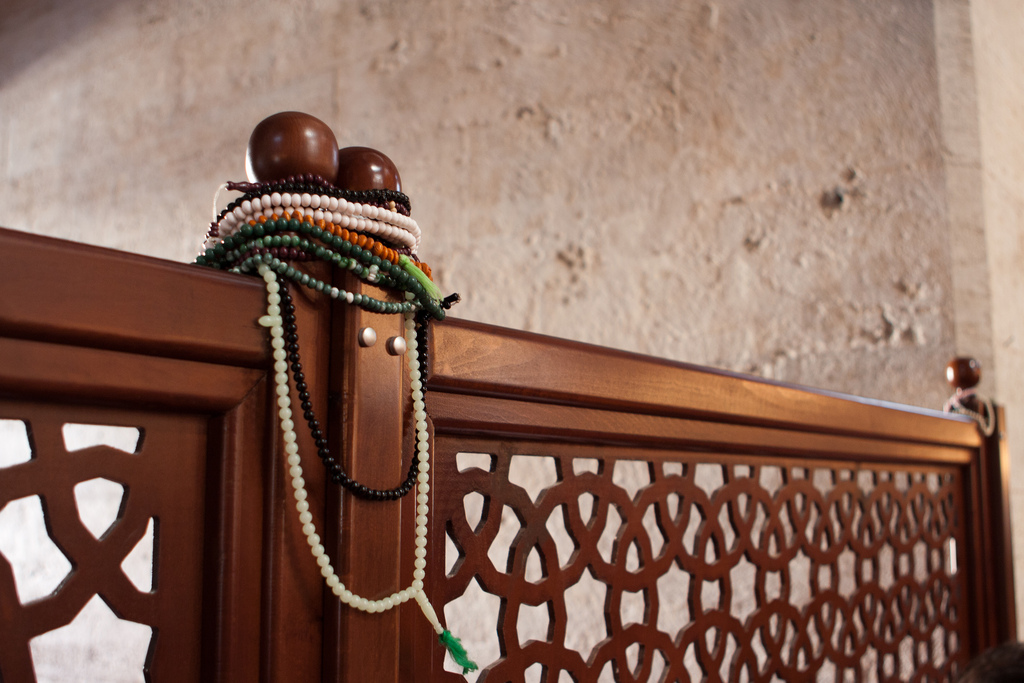
Ramadan is a holy month for Muslims who abstain from food and drink during the daylight hours, with an increased focus on devotion and prayer.
“It is a very holy month for us,” Iqbal said. “People who are not practicing other months, they become practising this month.”
For many asylum seekers who experience a sense of hopelessness and isolation inside, Ramadan is a source of spiritual sustenance.
“It is as important as seeing a mental health counsellor,” Iqbal said. He says many of the men who are reluctant to express themselves will openly cry during prayer.
“This is how we are still coping. That’s what’s keeping us alive, keeping us going, faith and belief in God.”
The asylum seekers are grateful for the delicious food delivered from outside, a welcome relief from the standard issue dinner.
The nightly deliveries facilitated by the Lebanese Muslim Association are funded by a rotation of private donors from the Muslim community.
Earlier in the month, food was not delivered because of limits around amounts allowed in, to be accompanied by a certain amount of visitors, Iqbal said.
“Sometimes we asked why there is no food came today. We found out later they were stopped and refused entry,” he said.
A LMA spokesperson said there were difficulties delivering food to the centre during the first few days of Ramadan.
“By now after all this time they (authorities) should know about this (Ramadan),” he said.
A recent rule change meant food was not allowed to be brought back into the private rooms of asylum seekers from the central visitors area, Iqbal said.
The rule fuelled wastage as fasting asylum seekers struggled to finish their allocation in a short period.
“(The idea being) we’ll let you bring in food but we won’t let you enjoy it,” Iqbal said.
“Little people have a little authority and they are just abusing it.”
In the centre, the men munch the food in the cold before returning to their rooms for solitary prayer.
Iqbal says a petition has been made for a room asylum seekers can gather in for congregational prayer.
“To cope in this situation we need that. When they make us pray alone in our rooms, we feel even more lonely and the toll becomes hard on us,” he said.
“They should provide a good facility because we are not criminals. We are not inmates.”
As night falls in Villawood, food containers are hastily packed as visitors say their final goodbyes and exit the mesh of wire and steel.
For those remaining, there is hope that someone, somewhere is listening, hoping, praying.
“We are the silenced ones. People don’t know about us,” Iqbal said.
A copy obtained of Villawood detention centre general manager Susan Noordink’s response to an official complaint made by fasting asylum seekers says standard conditions are being enforced.
“In regards to Ramadan food from the community, Islamic detainees have been advised that all standard conditions of entry will be in force,” Ms Noordink said.
“All community groups must abide by approved visits policy as provided by management and posted in notification in the Gatehouse and the visits area.”
The statement also said arrangements will be made to facilitate prayer areas for asylum seekers.
*Name has been changed at the request of the asylum seeker
Muslims are framed as a ‘problem to be solved’ by political leaders. Picture: Flickr/ Brian Jeffery Beggarly.
Andrew Robb wants quick fixes and easy answers for the problem of radicalisation, but his framing of the “Muslim” as a problem to be solved isn’t helping one bit, writes Sarah Malik.
My phone is exploding with Happy Eid! texts.
Except it’s not Eid. Not for me at least.
The texts are mainly from my well-meaning white friends who have watched Eid celebrations at Lakemba mosque on Channel Nine.
I’m celebrating the next day, like half the rest of the state’s Muslims. The old school method of marking the end of Ramadan involves waiting to see the arc of the new moon indicating the beginning of the lunar month as opposed to the fixed scientific calendar method.
This is one of the million fine details of the complex and diverse Muslim communities who hail from dozens of varied cultures and strains, but are forced into a uniformity by an external culture that imposes modes of understanding aligned with its own understandings of religious ritual, politics and practice.
One of the great attractions of Sunni Islam is the lack of hierarchical or mediating priest-class, with a focus on the individual’s direct relationship to God.
Sure there are imams who lead prayer, and scholars who have spent years nutting out points of law, and an axis of orthodoxy most mainstream leaders are guided by. Beyond that, leaders are made more by their following and popularity rather than anointed by overarching councils or bodies.
This makes things difficult for politicians like Mr Robb, who needs someone to cop the flak for the rash of young nutcases running to the Middle East.
When it’s young Muslim men, the community is expected to take responsibility.
Only when it’s a young white male like Jake Bilardi, there is a recognition of the risk faced by young, isolated people with complex personal compulsions and histories that make them vulnerable to the call of extremism.
One thing remains clear, there seems to be no one-size-fits-all approach to the trajectory of these lone and few individuals who often leave behind their own baffled and distraught families and communities.
These few individuals rarely interact with mainstream leaders or mosques. Like most young people, not just Muslims, traditional religious authorities (read: old people) have failed to connect with the millennials’ quest for meaning in a changing social media world.
This is not necessarily a bad thing.
The internet, like most things, is a reflection of the people who use it.
Social media provides communities for minorities rarely given a voice in the mainstream. Hamza Yusuf and Ustadh Nouman Ali Khan are among a spate of celebrity sheikhs that have connected online with global youth audiences.
They successfully market a homegrown western Islam, that despite their detractors is grounded in the world migrant kids can understand and for all its conservatism generally stress political participation and integration.
Mr Robb wants quick fixes and easy answers for the problem of radicalisation.
There is one simple one that I can offer free of charge.
The constant framing of the “Muslim” as a problem to be solved by politicians and media who use these communities to whip up ratings and dog whistle politics is a disgrace. It is far disproportionate to any risks posed.
It only adds to the genuine anguish of Muslim communities struggling against a small but virulent association of extremism with the added burden of racial aggression and hysteria.
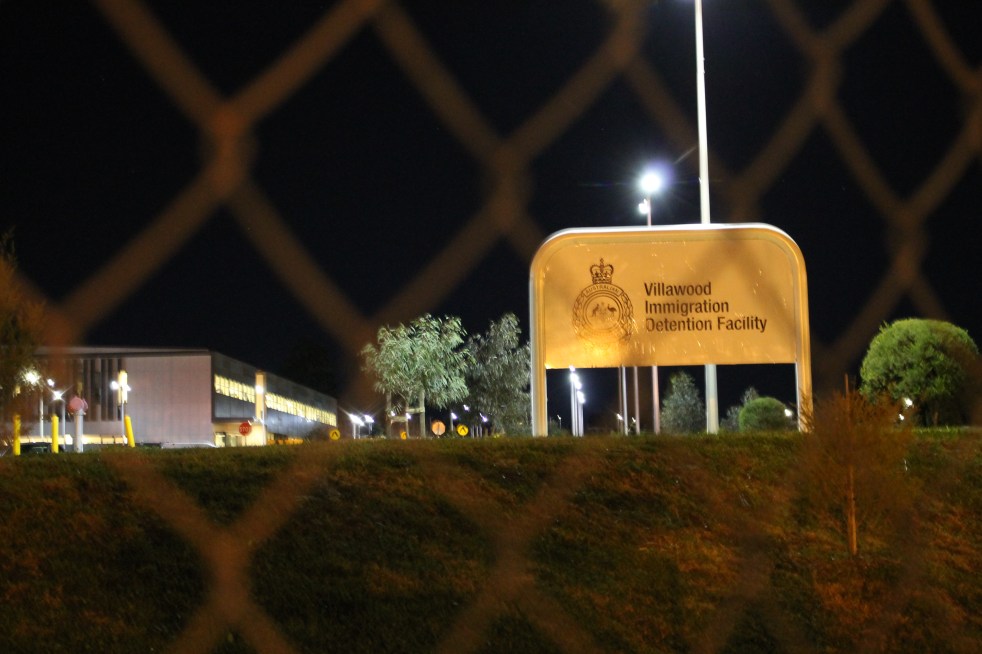
Villawood detention centre. Picture: Moyan Brenn/Flickr
Check out PART THREE of my exclusive investigation with The Guardian’s Ben Doherty on the continued detention of Egyptian asylum seeker Sayed Abdellatif, with added behind the scenes information.
Over the last few weeks I have been making the journey to Villawood detention centre, in Sydney’s south-west. After navigating forms and metal detectors I am tagged with a bright wristband and invisible ink and ushered inside.
Once inside, I have spent hours talking to Abdellatif, his wife and six children inside the secure facility. For the first time ever, they speak candidly in person, about their experiences in detention and their journey to Australia.
Sayed Abdellatif and his extraordinary detention in Australian immigration
BY SARAH MALIK AND BEN DOHERTY Exclusive: Considered a ‘dangerous terrorist’ because of previous convictions that have now been found to be false and revoked, Abdellatif, his wife and six children remain in limbo in the confused haze of the detention system
Sayed Abdellatif’s son is celebrating his 12th birthday. On a low table, plates are piled with homemade cake and colourful chunks of pomegranate, mango and kiwifruit.
The birthday boy wears sneakers and jeans. He talks loudly to his sisters and brother and mum in a broad Australian accent. The treats are offered around, and happily accepted.
It could be any party, anywhere, save for the fluorescent bands on everybody’s wrists.
The Abdellatif children are visiting their dad in a separate room just off the central visitors’ section of Sydney’s Villawood detention centre.
The whole family are detainees, and their father is considered by Australian authorities to be an extreme security risk, “plainly a dangerous terrorist” in the words of the attorney general George Brandis. Abdellatif denies the charges, which Interpol have found not to be true.
Outside the small room used by families like the Abdellatifs, the visitors’ area is packed, as it is every Sunday.
Reunited couples nuzzle in corners. Family members, friends and refugee advocates greet inmates with hugs and precious supplies from the outside. Coffee, chocolate biscuits, and food in plastic containers that have survived the metal detectors line the tables. There are no phones or cameras allowed.
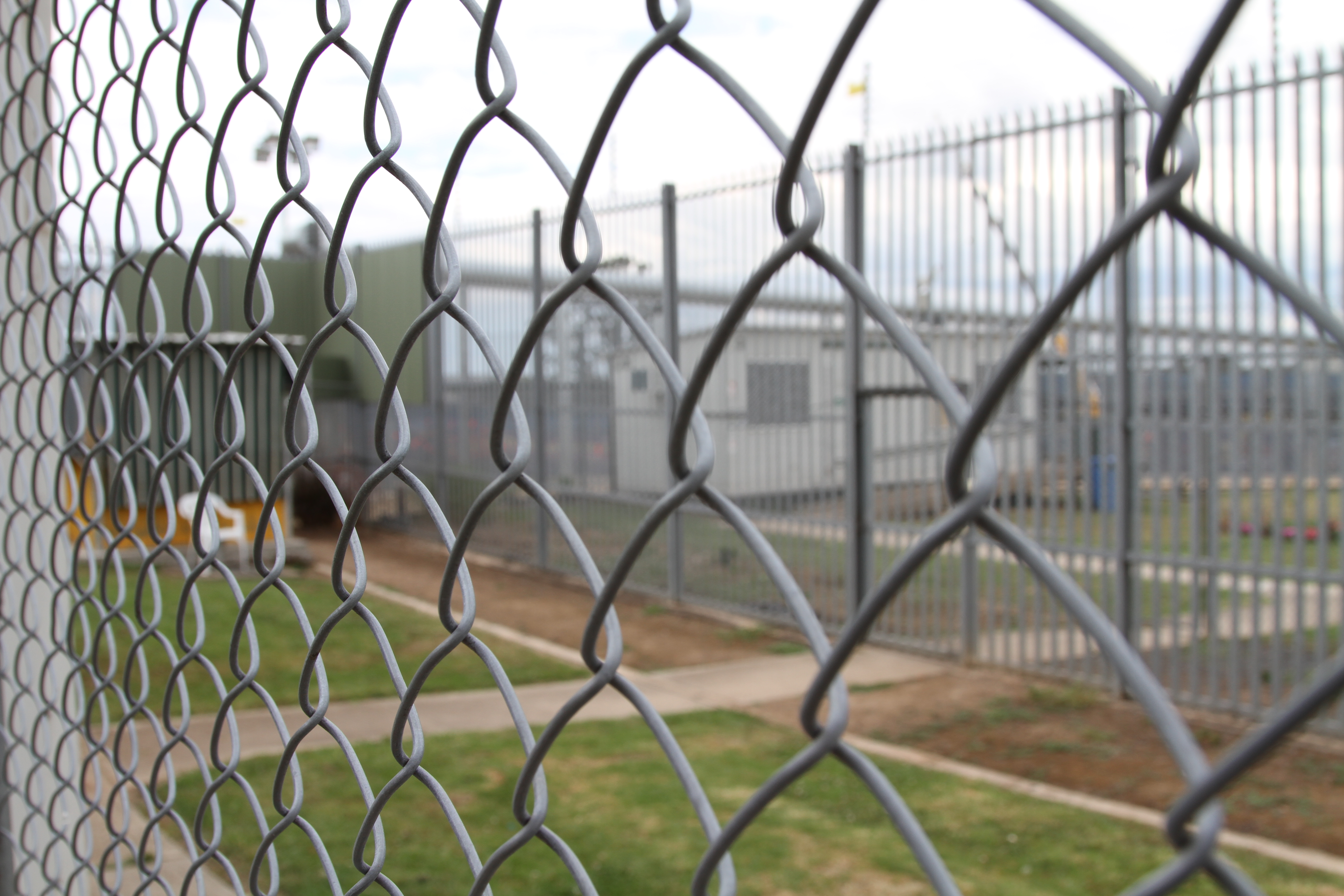
Outside, Villawood is being renovated – the byzantine centre is a maze of gravel paths and patches of barren land cordoned off for expansion. Beyond that is the wire – the imposing metal fence that surrounds Villawood, the boundary that separates it from the outside world. Further still there is Sydney.
And at the centre of these concentric circles, behind the unknowable rings of security, sits Sayed Abdellatif.
Weary from 18 years in exile, two and a half of those in the confused haze of the Australian immigration detention system, he explains why he has chosen to talk.
“We were being badly treated by the immigration department,” he says. “We were silent … but that wasn’t because we were doing anything wrong. But this way didn’t work. We have to change plan.”
Sydney’s Villawood detention centre. Picture: Flickr/ DIPB images
A life of exile
Abdellatif’s story is that of a lifetime in exile.
The 44-year-old Egyptian has not lived in his home country since 1992. His children have known only lives in the shadows of societies all over the world, or trapped in detention.
Abdellatif left Egypt for Albania in 1992. There he worked for a civil society organisation called the Revival of Islamic Heritage Society (RIHS).
He met and married his wife in Albania. His eldest daughter was born there in 1995. But the family was forced to flee in 1997, after a civil uprising toppled the government and plunged the country into an economic crisis.
“We were forced to leave,” Abdellatif says. “The only way we had at that time was UK.”
Three more children were born in the UK – in 1997, 1998 and 2000 – before the Abdellatifs were forced out to Iran in 2001. Their son, the boy who celebrates his birthday in detention today, was born in Iran in 2003.
In Iran the family were arrested as illegal immigrants. They lived for a time in an Iraqi refugee camp before spending years under house arrest.
In May 2010, an Iraqi people smuggler moved the family through Malaysia and Indonesia, in the hope of taking them back to the UK. They were stopped in Singapore and deported back to Indonesia.
“When we came back to Indonesia we were arrested by Indonesian immigration,” Abdellatif says. “Once we were arrested we applied for asylum at the UNHCR in Jakarta.”
The family spent four months in detention and had two interviews with UNHCR officers, before spending two years in the refugee “queue” waiting for a determination on their status. The family’s youngest child, a boy, was born in Indonesia in 2010.
The family spent long months, as thousands across the Indonesian archipelago do, waiting for a refugee determination. “Then we lost hope,” says Abdellatif. Running out of money, he says, with no answer forthcoming from the overrun refugee agency, the family made a decision to find a boat bound for Australia.
“We always had a hope to arrive in a safe place.”
As Abdellatif speaks, his four daughters sit, wearing neat hijabs, next to their bespectacled mother. His two boys, 12 and four, stomp noisily in and out of the glass-panelled room.
The children are allowed to leave the Villawood compound to attend school. The girls go to the local high school nearby. The two eldest, 19 and 17, will sit the HSC this year. They walk to school under guard each day.
One daughter says it is difficult to explain the toll detention has had on her family during the many years in the UK, Iran and Indonesia.
“We already lost so many years of our life … it just feels like it’s going on forever. I’ve lived more than half my life in detention,” she says.
The demands of school make regular visits difficult.
“We don’t see Dad except on weekends,” she says, “we don’t sit as a family. I don’t remember the last time we had a proper meal together.”
Interpol and quashed convictions
The Abdellatif family’s detention in Australia began unexceptionally.
Housed in the low-security Inverbrackie detention centre in South Australia, they awaited release into the community after an Asio recommendation they be allowed to leave detention (a decision the spy agency has since recanted as a “processing error”, the first in a litany of government mistakes in the case).
But the family’s situation was cast into sudden national prominence in April 2013, when it was discovered Sayed Abdellatif was the subject of an Interpol “red notice” for murder and firearms charges in his home country.
The Abbott-led Coalition, then in opposition, used the case to lambast the Gillard government’s handling of border security. Labelling Abdellatif a “pool fence terrorist”, Abbott said the government had failed to notice that a “convicted jihadist terrorist was kept for almost 12 months behind a pool fence”.
Abdellatif says he first became aware of the firearm and murder convictions against him through the media.
“My name become in the media … (it was) huge, huge propaganda. I was shocked at that time,” he says, adding that he was given little information about why he was transferred to Villawood’s high-security Blaxland compound.
Although he was later transferred to a medium-security area within Villawood, he remains separated from his family, who live in the family compound. They have declined an offer from immigration to be removed into the community because they don’t want to be separated from their father.
The Abdellatifs live divided. Half-lives, neither in Australia nor out. They cannot be deported because of the real risk of persecution in Egypt, but by ministerial decree they are unable to apply for a visa.
Their detention is indefinite.
The Abdellatif case took a dramatic turn in June 2013 after an investigation by the Guardian, in both Egypt and Australia, resulted in the violence-related convictions against Abdellatif being quashed.
Abdellatif had been convicted in an Egyptian military court, in a 1999 mass trial of 107 men, of premeditated murder, destruction of property and possession of firearms and explosives.
The Guardian contacted the Egyptian authorities following interviews with Abdellatif’s lawyers and verified court documents that showed his convictions made no mention of murder or explosives possession.
As a result, Interpol took the extremely rare step of removing all charges relating to violence from their red notice list.
A red notice on Abdellatif’s name still exists. It now lists convictions for “membership in a terrorist group” and “providing forged travel documents”, charges Abdellatif strenuously denies.
The terror conviction relates to allegations that Abdellatif was an operative of Egyptian Islamic Jihad, but he told Guardian Australia: “I have never been a member of any group. The Egyptian government [under President Mubarak] used to falsely paste this charge to any person they want to punish or to get rid of.”
Abdellatif’s only other purported “link” with terrorism was his employment by the Albanian branch of the Revival of Islamic Heritage Society. This was mentioned at his 1999 trial, but was not part of his conviction.
Abdellatif worked for RIHS, a multi-national Islamic civil society organisation, between 1992 and 1996. It was later infiltrated by al-Qaida and outlawed by the UN.
Abdellatif claims the Albanian branch was “clear” when he worked there and he never had any involvement in organising or funding terrorism.
“It was a charity organisation. We were building mosques, supporting adoption.”
Abdellatif also denies ever forging documents.
Now new documents, subsequently submitted to Egypt’s supreme military court, and provided to the Australian government more than 12 months ago, state that the evidence used to convict Abdellatif was obtained under torture.
Abdellatif’s father, Ahmed, who gave evidence against his son in the original trial, signed a statutory declaration in 2013, stating: “All of what has been said as my words regarding my son … are incorrect and were said due [to] compulsion and torture by the interrogating authority.”
Abdellatif’s brother-in-law, who similarly testified against his relative, signed an affidavit: “all the statements that were attributed to me in the public prosecution investigation, especially the statements that mention Sayed Abdellatif, were written from the security book and dictated by the Deputy Public Prosecutor. I objected to the statements and I denied them. I was subjected to torture and electrocution in order to sign the paper.”
The State Security Investigations Service, the principal domestic security and intelligence agency of the Mubarak regime, which conducted the investigation, was dissolved in 2011, after evidence emerged it was involved in “extraordinary rendition”, and tools of torture and secret cells were uncovered at its headquarters.
In 2012, the court re-tried seven of the original 107 convicted men. All seven were acquitted, the court finding the evidence used in the original convictions was obtained under torture.
“The court, having verified the claim documents, hearing witnesses for and against the prosecution, and comparing the crime and innocence evidence … it seems that the claim and accusations against those accused are surrounded by thick layers of doubt and suspicion that weakens the evidence derived therefrom,” the court ruling says.
Abdellatif says these documents were passed to the immigration department, the AFP and Asio in December 2013.
“Every government will understand this trial is a political trial. This trial had 107 accused. We don’t know each other. We never met with each other.” He says confessions were extracted under torture and played off against each other. But the new evidence, he says, has not moved his case forward.
“Every time we give them [Australian authorities] new evidence the reaction is punishment.
“We received very bad treatment, unjust treatment, and still [we are] receiving this treatment.”
The Australian Federal Police told Guardian Australia it did not make recommendations on immigration matters, and that the extent of its inquiries into Abdellatif were to establish his identity.
“The information contained in the Interpol Red Notice and any investigation into these allegations is a matter for the Egyptian authorities,” the AFP said.
The AFP said other inquiries regarding Abdellatif’s status should be directed to the Australian Security Intelligence Organisation. Asio refused to answer questions about Abdellatif.
The immigration minister Peter Dutton has refused to comment on Abdellatif’s case. His department would say only that security issues were a matter for Asio and, “the department has offered Mr Abdullatif’s [sic] family placement in the community. They declined this offer.”
The Abdellatifs say they declined because they do not want to be separated from their husband and father. And regardless of where they are housed, Abdellatif’s family cannot – and unless the minister’s decision is overturned, can never – apply for a visa.
Life in Australia
Abdellatif looks tired.
“When we decided to come to Australia we had a big hope to come and start a new life.”
One of his older daughters translates the difficult English phrases into Arabic for him. She breaks down in tears as she talks about the difficulties of being separated from her dad.
Abdellatif watches on silently. The breakdown in composure and the language difficulties compound his powerlessness. His daughters are teenagers still, but burdened with adult realities.
“After what happened to us in Australia we are very disappointed,” he says.
Abdellatif suffers Crohn’s disease, an inflammatory bowel condition, and he has twice gone on hunger strike in detention.
“When I become frustrated or angry my Crohn’s disease becomes very active and painful,” he says. “I can’t sleep. I can’t sit on the chair.” He says he has suffered bleeding and weight loss in detention, and his family worries for his health.
One of his daughters speaks. She says the effect of the family’s experiences in detention has been compounded by the expectation that life in Australia would be different.
“We have seen all detention in all countries. What happened in other countries we expected it. But in Australia I expected they would follow the rules and respect human rights.”
From Villawood’s less-regimented family compound, his wife and children make regular visits to see their father and husband. They all feel trapped by their father’s legal limbo.
“We are completely frozen,” one daughter says. “We need the minister to lift the bar and allow us to apply for permanent visa.”
For the Abdellatif children, a future of apparently-endless detention is a bleak uncertainty. They struggle for the smallest normalities. At school, the girls are often invited out to parties. They can never go, or even explain why.
“They [my friends] think I’m rude,” one daughter says. “It kills. Every day you wake up, you don’t know what’s going to happen.”
The girls studying for their HSC have to compete with 40 other detainees for access to three computers for their one hour of daily internet time. It makes studying and finishing assignments difficult. A younger sister says detention is “like being trapped in a place where you can’t see anything … like a blank page”.
And another says the impact of being separated from their father is fraying their own relationships. Sometimes her siblings will sullenly withdraw, retreating to rooms and refusing to talk. Or they’ll fight with each other and scream.
“If I knew I had done something wrong and was being punished for it, I’d accept it,” she says. “What makes it harder is that I know none of us has done anything wrong.”
Her life is a carefully-circumscribed existence, of wristbands and metal detectors, of visiting hours and security details following her to school.
Her dream is simple: “To go to the mall with my friends.”




 Sarah Malik