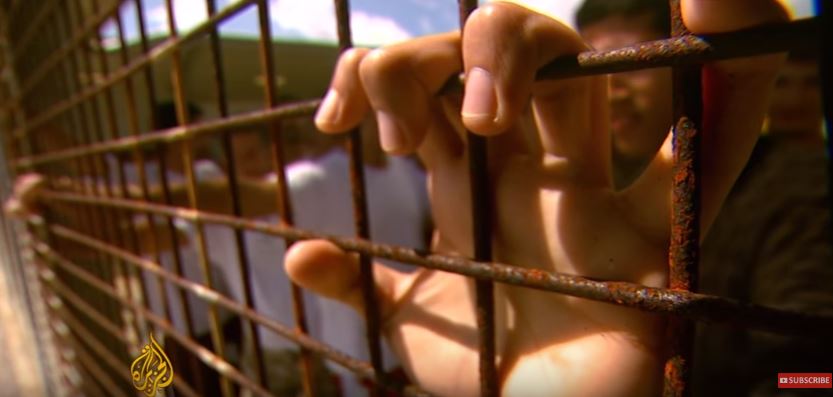
Worked as a freelance researcher/producer on this report on the response of refugee rights groups to Australian Immigration Minister Peter Dutton’s comments on Sky television on asylum seekers.
Author: sarahbmalik

Indigenous elders look to take fight over stolen wages to the UN as featured on Al Jazeera English
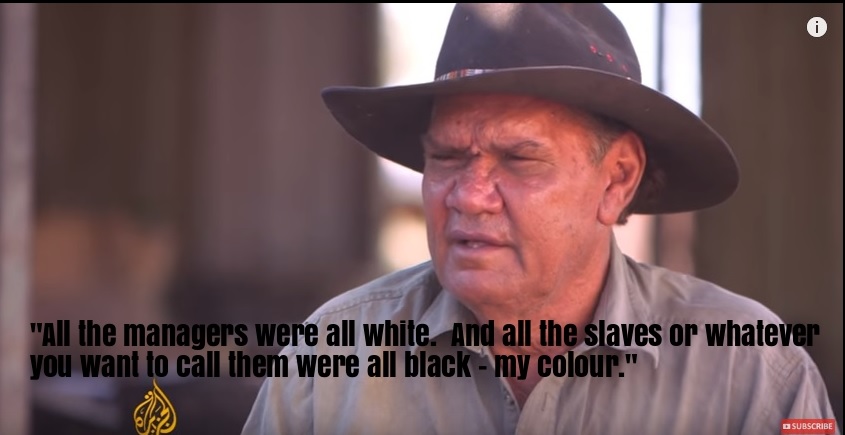
Worked as a freelance producer/researcher on this story on Indigenous stolen wages in Western Australia’s Kimberley region.
“Aboriginal pensioners in Australia are considering appealing to the United Nations to investigate whether Australia’s governments owe them compensation for ‘stealing’ their wages. Until the 1970s it was legal to withhold wages from Aboriginal people who were not seen as responsible enough to manage their own money. The wages were supposedly held in trust – but they have never been handed over. Andrew Thomas explains.”

Profile: Abdul Sattar Edhi as featured in The National
Charity begins at home for legendary philanthropist
Abdul Sattar Edhi may be the founder and head of Pakistan’s largest social welfare organisation, but the legendary philanthropist still lives in the back of his first medical clinic in the heart of working class Karachi.
“I’m a beggar. I’m happy to stand on the road and ask for alms,” he says.
“He is an international beggar,” his wife, Bilquis, chimes in, laughing.
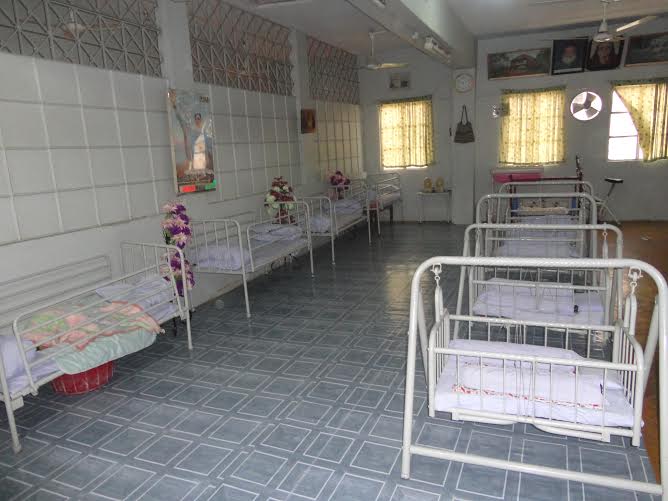
Opened in the 1950s, the Mithadar clinic is today part of a sprawling network of medical centres, mortuaries, adoption and the largest volunteer ambulance service in the world serving Pakistan’s poor and destitute, as well as refuges for unhoused men, women and children. Such services are vital in a country with effectively no state social welfare apparatus. And the Edhi Foundation, which is largely funded by public donations, also provides humanitarian relief in disaster zones around the world.
Earlier this year, Nobel laureate and Pakistani women’s rights activist Malala Yousufzai and her father Ziauddin spearheaded a campaign for Mr Edhi to be nominated for the Nobel peace prize for his decades of charity work at home and abroad. But the social activist, who estimates his age to be close to 90, insists the work itself is its own reward.
“I’ve spent my life living according to my principles, in poverty, in simplicity,” he says. “To look after and help the poor — this is my work and my purpose.”
Mr and Mrs Edhi live in rooms attached to the three-storey Mithadar clinic, which also hosts a crèche and school for abandoned children. Located near the coastal rim of Karachi, ambulance vans emblazoned with the logo of the Edhi Foundation are stationed outside, ready to navigate narrow, paths bustling with vendors hawking street food. The air is thick with smog, and the pressing rush of the city’s bursting population.
Sporting a straggly beard and dressed in a plain shalwar kameez, Mr Edhi looks and lives exactly like the poor he serves. And his refusal to accept aid or money from powerful figures seeking influence has given him kudos in a society driven by conspiracy theories and suspicious of foreign interference.
But, after decades working around the clock on a punishing schedule, Mr Edhi’s health is failing. His son Faisal, helps to run the Foundation’s day-to-day operations as his father makes hospital visits for dialysis treatment twice a week.
Mrs Edhi says her husband’s fragile health has been a blessing, forcing the powerhouse to slow down: “Because his age is advanced it’s hard for him to walk around. He gets restless. He used to walk around a lot and now he says ‘you’ve locked me in cage’.”
***
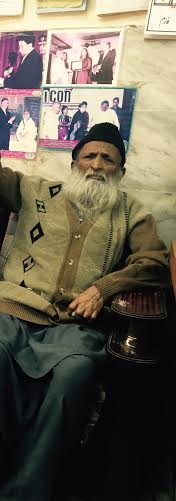
Born in the state of Gujarat, India in 1928, Mr Edhi migrated to Karachi with his family in 1947 during the partition, as Pakistan was carved out of newly independent India as a homeland for the subcontinent’s Muslims.
Even as a young man, Mr Edhi was passionate about alleviating the poverty and suffering he saw around him, his wife says. He began his social work career equipped with an old van he used to pick up the bodies of those suffering addiction and the unhoused on the street before preparing them for burial.
Mrs Edhi was a teenager when she started working as a nurse at the Mithadar clinic and was proposed to by Mr Edhi.
“He had nothing. He had a small clinic and a broken down car,” she says. “Everyone said he was crazy, a ‘maulvi’ [religious figure or leader].”
“They said it wouldn’t last six months. It’s been over 44 years.”
The pair share an easy-going intimacy. When they work together, her banter is a counterpoint to his stern seriousness.
Mr Edhi, credits his wife for the support that has enabled the couple — both from Karachi’s most impoverished quarter — to accomplish what became their shared mission.
“I never went to school. The environment has been my teacher. I have become human by learning through my world,” he says. “I don’t even know why my wife liked me … I’m lucky my wife accepted me,” he adds, smiling wryly.
***
The partnership has not been without its challenges. The couple’s four children were raised by Mrs Edhi’s late mother as the pair dedicated their life to social work.
The couple’s son, Faisal, who is poised to take over as head of the Foundation, has been working alongside his father for the past 15 years. He remembers eagerly awaiting his father’s weekly visits as a child. In Ramadan, he would wait on the footpath until his father arrived to break fast, sometimes hours after sundown.
Faisal and his wife Saba live in a simple home in neighbouring Kharadar with their four children. Unlike his parents, Faisal is openly scathing of the failures of the Pakistani state.
“The biggest problem is corruption and this can only be resolved by the redistribution of wealth,” he says.
Faisal adds that his father always loved “revolutionary” people, which often pit him against those with power.
“He always thought what’s the point in praying in a mosque all day but not helping the poor?,” he says. “You praise God in the mosque but if a poor person enters, you throw him out in case he steals your shoes.”
“If there’s an unequal distribution of wealth, not only your shoes but everything will be stolen.”
***
Mr and Mrs Edhi have played host to the world’s most famous politicians and celebrities. Comically, however, the couple rarely recognise the identities of the famous faces that come to visit.
“He looked like a fakir [an ascetic existing on alms]!” Mrs Edhi laughs as she points to a haggard-looking Sean Penn in an album.
While Pakistani politicians also come to pay court and garner favour, the couple say their work has pit them against powerful interests.
Mr Edhi’s most vociferous critics are the religious right. He has been accused of promoting immorality for providing a refuge for abandoned children and women escaping violence. His insistence on an inclusive spirituality and serving the community regardless of caste, class or creed make him both revered and — in some quarters — reviled.
“There is no religion higher than humanity,” he says in response to the criticism.
Mrs Edhi recalls a young boy asking her opinion on religious figures who declare her husband an “infidel” and claim the pair will be locked out of heaven for taking care of “illegitimate” children.
“I said to him, ‘Give [the religious figures] my salaams and tell them wherever you people go, we don’t want to go there’.”
“If scoundrels like [them] go to heaven, we’d be happier in hell.”
The story was originally featured in The National. You can read the full piece here.

Life in K-town
Karachi. A place to escape your heartbreak, because there is enough heartbreak here for five lifetimes. We’re in the Islamic republic of Pakistan and you need to declare the shahadah before you get your overseas national ID card, so that reference may be mildly blasphemous and you’ll have to forgive me.
I’m sitting in my uncle’s house in Kharadar, near the coastal rim of the city. It literally translates to ‘the place of bitter water’. It’s where my parents grew up as neighbours in a nearby now demolished building. It’s one of the oldest and most impoverished areas in Karachi. Narrow littered unpaved paths brimming with Dickensian style craftsmen, food carts, street vendors, mosques and steaming restaurants chaotically weave through old, dilapidated buildings crammed with pristine flats. Flats scrubbed clean by industrious women making morning chai and oiling children’s hair into tight plaits for school.
I could have stayed at a hotel, but it feels like all the stories I could want are right here- along the paan-stained walls and sad cats drifting through refuse.
The throng of traffic blares at all hours through the rectangle lattice windows, along with the poetic ramblings of beggars chastising the pious at fajr and the whoosh of intermittent water and electricity flagged by the ebb of the ceiling fan coming to a lazy stop.
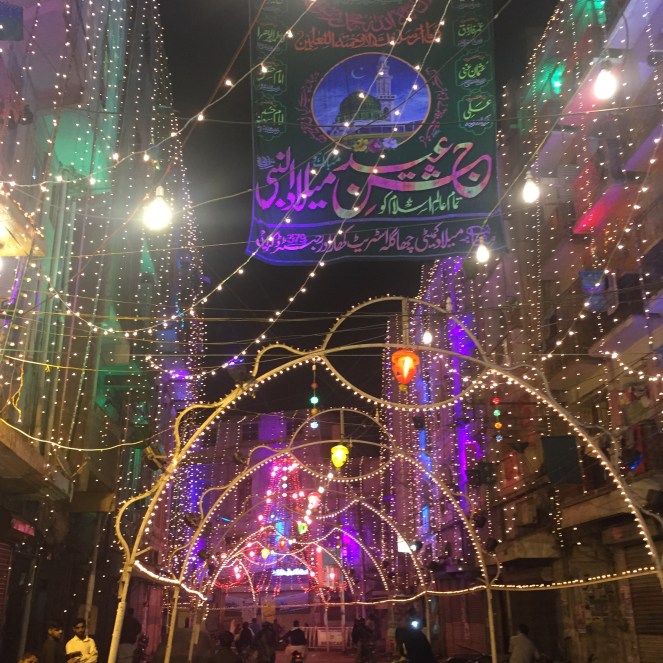
The buildings lit up last night, decorated for the Prophet’s birthday which falls on the 12th day in the Islamic month of Rabi’al awwal. In honour of this day there will be electricity at night for 12 days for festive lights and processions. To make up for this more shortages will continue in the day. Maybe the Prophet would have preferred people actually had electricity to work but that’s a question for another day. I admit the music, processions and lights have bathed the city in a celebratory air.
The adhaans are not as sonorous as in the Middle East. They jar and clang together interrupted by a premature, occasionally angry khutbah. Like everything else in Karachi even the adhaans need to battle for airspace.
I understand why men have motorbikes here. They can flee the crammed rush of people pressing in at all times, at home, on the streets, in the mosques.
Privacy is a non-existent concept here. Everybody wants to talk and visit all the time. The family is like a hive where everyone moves around each other like molecules in an atom. Life happens on spotless floors, with different mats efficiently laid out for eating, praying, sleeping, furling and unfurling like flowers.
I don’t feel part of the atom, more like a galaxy far away in need of decompression and alone time. Nobody really understands my need for periods of solitude or the compulsion to post food pictures on social media. There are some cultural bridges we may never cross.
I feel happiest flying through the street in a rickshaw or if I’m lucky on the back of a bike with the wind blowing through my shalwar kameez finding my next food or sufi shrine fix. See below >
ALL THE FOODS
I am a food pest. I once spent an afternoon in Hanoi trying to find the ‘best’ noodle place in town. I spend even longer on the internets scoping out recommended hotspots. It’s easier in Karachi because I can speak the language. A few detours and instructions from helpful bystanders later- we arrive.

Sindhi style chicken Biryani at Telefood is very good, but admittedly not the best I’ve ever had. The rice is light, fluffy and aromatic. Another positive is I felt good all day afterwards. The place is superbly clean with an open kitchen. It’s more of a take-away place, there’s only a few chairs and no space for families (codeword for no place for respectable ladies). The only other option was to eat on the street so we had a #girlsatdhabas moment and sat and ate anyway because I’m not really respectable, and no one seemed perturbed. It was fabulous.

Zahid Nihari’s comes highly recommended and it lives up to its reputation as the best in town. The main Zahid in central Karachi’s arterial Tariq Road shopping district was blocked for the shi’a commemoration of the martyrdom of Hasan so we had to make do with the Saddar branch which churns out the good stuff along with hot, fluffy naans and fresh lemon.
SUFI SHRINES
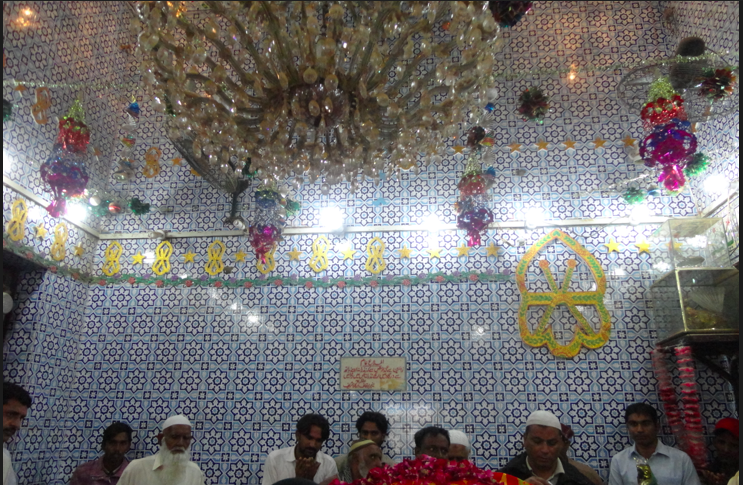
A lot of conservative people decry sufi shrines as heretical, filled with cult-like crazy sufis engaging in idolatrous behaviour. There is that, but I can see the attraction of this more emotional spirituality reflected in the country’s legendary qawali tradition, to the throngs of women and the very poor lining the shrine. The air was filled with the warm incandescent aroma of roses and incense, tears, hope and ecstatic prayer, a romantic homage to great saints encapsulating the humanitarian values of the faith.
In a city where survival is a constant struggle, it felt like a refuge, especially from the overwhelmingly male spaces of Karachi, including the city’s mosques, which unlike most places in the world are closed to women.
The liberal/arty/middle class view of Sufism was surprisingly contemptuous (in light of said wacky cult elements perhaps) and they seemed pretty suspicious of the whole religion shebang in general (understandable in Pakistan). I did note a huge interest in Meditation, Ashrams and Indian eastern new age type thought. It was pretty strange to see brown people reconsuming their own repackaged religious traditions from the west. It’s like buying hipster coconut oil for three times the price at western boutiques when you spent your childhood trying to avoid being the kid with stinky oily coconut hair using the $5 Parachute brand that congealed and needed to be microwaved before head massaged in. You don’t need white people to tell you what’s good people. Just look at brown girl hair – it’s glorious- $5 oil always!
BEACHING

Ok so Clifton beach is no Coogee or Bondi. Anywhere in the world would struggle to live up to Sydney’s magnificence. But any place involving water and sand is pretty much where I need to be. Another plus is you can watch the sunset while munching samosas, riding a camel or eating fairy floss #win.

Human rights groups press government to end detention- as featured in the Guardian
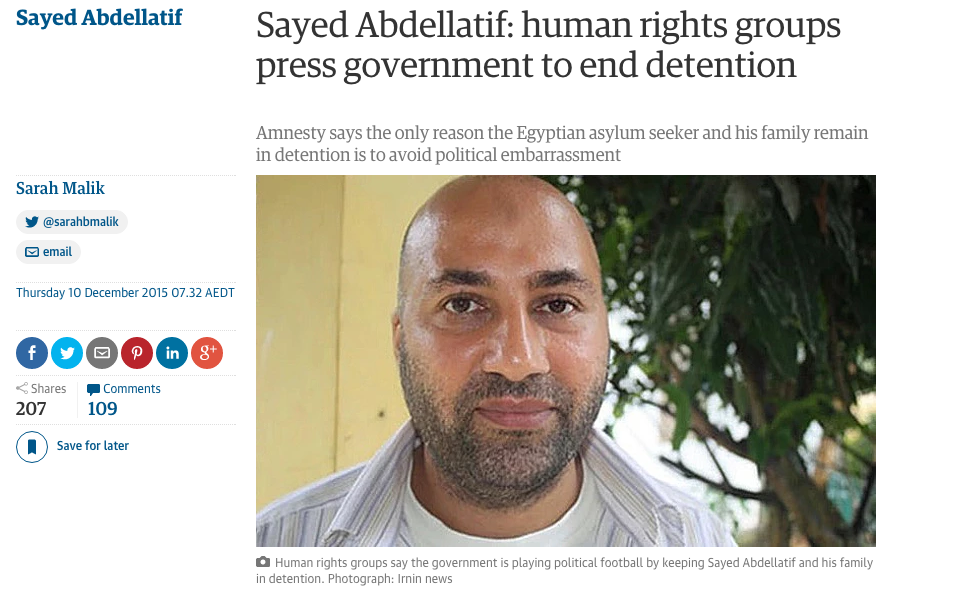
Human rights groups have condemned the continued incarceration of Egyptian asylum seeker Sayed Abdellatif after a Guardian Australia investigation revealed the United Nations had formally told the Australian government he should be immediately released.
Falsely condemned as a terrorist by political leaders, Abdellatif, his wife and six children have been held in detention for more than three years without charge.
In the first of a three-part series, the Guardian on Monday revealed the UN Human Rights Council in June ruled Abdellatif’s detention breached international law, was indefinite and arbitrary, and directed Australia to release him and compensate him for his wrongful detention.
The series also revealed the struggles of Abdellatif’s two eldest daughters, the first students to graduate from high school while incarcerated at Sydney’s Villawood detention centre, as well as detailing the torture inflicted on Abdellatif by Egypt’s State Security Investigation Service (SSI) under former dictator Hosni Mubarak, which forced him to flee his homeland in 1992.
Amnesty refugee campaigns spokesman Graeme McGregor said government intransigence around Abdellatif’s case was a result of the negative publicity the story had generated.
“It’s outrageous that these children are being denied the opportunity to have a normal adolescence with their father,” he said. “It’s hard not to believe the only reason Mr Abdellatif is trapped in detention is because of the political embarrassment that surrounds the case.
“We often lose sight of the fact a family that came to Australia to build their life have been denied that opportunity.”
The vice-president of the Muslim Legal Network, Rabea Khan, also criticised the family’s continued detention despite an assessment from the inspector-general of intelligence and security that made clear Abdellatif poses no threat to Australia’s national security. The inspector-general also criticised the government’s handling of Abdellatif’s case.
“It’s disturbing that the Australian government continues to sit on its hands instead of going ahead and releasing this man from detention,” Khan said.
“This is yet another example of the government playing political football with the plight of refugees.”
In 1999, seven years after he left Egypt, Abdellatif was convicted in absentia in a mass show trial of 107 men in Cairo. The trial was condemned as unfair byAmnesty and Human Rights Watch. It has also since been discredited in his home country as a politically motivated suppression of Islamic political opposition.
A 2013 Guardian Australia investigation into the trial uncovered further serious irregularities, resulting in Interpol dropping all convictions for violence in a red notice against him.
The Abdellatif family has been found by Australia to have a prima facie claim to refugee status. Australia is obliged under international law to offer them protection.
Refugee Action Coalition spokesman Ian Rintoul said Australian authorities had used the red notice as an excuse for not processing Abdellatif.
“All the evidence points that the red notice was placed there wrongly by the Egyptian government as a politically motivated [tool] to victimise Sayed,” Rintoul said.
“The degree the government has caused Sayed and his family to suffer cannot be overstated,” he said.
“They have been forced to deal with humiliation inside detention and the girls at school – and for no reason other than the government would not face up to the fact that they made a terrible mistake in keeping them in detention in the first place.”
Human Rights Law Centre legal advocacy director Daniel Webb said Australia’s detention regime made detaining people a first resort, and vested extraordinary powers over people’s lives in the position of immigration minister.
“Giving relatively unchecked powers over peoples’ basic rights to one politician is a recipe for injustice,” he said.
“The result is a nightmare for the people – like Sayed’s family – who get caught up in the system, locked up with no appeal rights, not knowing if or when they’ll ever be released.”
The government has maintained a resolute silence on Abdellatif’s case, despite being offered several opportunities to comment.
Guardian Australia has repeatedly approached the government for a response.
For the latest series, Guardian Australia first provided written questions to the immigration department on 22 October. After initially agreeing to provide answers by 30 October, a department spokesman has since refused to answer any questions and directed all queries to the office of the minister, Peter Dutton.
Dutton’s office has not responded to any inquiries.
 Sarah Malik